
 By Labscroll Medicals
In healthcare, there are two distinct approaches: reactive and proactive. The reactive approach involves waiting for symptoms a persistent cough, a new pain, or unexplained fatigue and then seeking a diagnosis. The proactive approach, however, is about seeking health before you lose it. This is the foundation of early disease detection, a strategy that uses medical screening to find diseases at their earliest, most treatable stages, long before a person feels sick. This guide explores “The Importance of Early Disease Detection Through Screening” and why this proactive mindset is the most powerful investment you can make in your long-term health. Understanding “The Importance of Early Disease Detection Through Screening” can, quite literally, save your life.
This article will break down what early disease detection truly means, the life-saving benefits of catching “silent” diseases early, what key screenings are involved, and how to overcome the common barriers that stop people from taking this vital, empowering step. This information is designed to replace fear with facts and empower you to become an active advocate for your own well-being.
Medical Disclaimer: This information is for educational purposes only and does not replace professional medical advice. Screening recommendations vary based on individual age, risk factors, and family history. Always consult a qualified healthcare provider to determine which screenings are right for you and to interpret any results. In medical emergencies, contact emergency services immediately.
What is Early Disease Detection, Exactly?
Early disease detection is the systematic use of medical tests to find health problems in people who have no symptoms of that disease. It is the core principle of preventive medicine. It’s important to differentiate this from diagnostic testing.
- Health Screening (Early Detection): This is proactive. You feel perfectly healthy. The goal is to find a “silent” or asymptomatic condition, like high blood pressure, pre-diabetes, or an early-stage cancer.
- Diagnostic Testing: This is reactive. You feel sick or have symptoms. The goal is to find the cause of those symptoms to make a diagnosis.
This article focuses on the first category. The entire premise of screening is to find a problem when it is small, localized, and your body has not yet been overwhelmed by it.
The Vicious Cycle of “Silent” Diseases
The greatest argument for early disease detection is the prevalence of noncommunicable diseases (NCDs). According to the World Health Organization (WHO), NCDs primarily heart disease, cancer, chronic respiratory diseases, and diabetes are the leading cause of death and disability worldwide. The defining feature of many of these conditions is their “silent” nature in the early stages.
Think about these common conditions:
- Hypertension (High Blood Pressure): A person can have dangerously high blood pressure for years without a single symptom. All the while, this pressure is damaging arteries and straining the heart, dramatically increasing the risk of a future heart attack or stroke. A simple blood pressure check is the only way to detect it.
- High Cholesterol: Like hypertension, high levels of LDL (“bad”) cholesterol don’t make you feel sick. It silently builds up as plaque in your arteries (a condition called atherosclerosis), narrowing the path for blood. A simple blood test (lipid panel) is needed to find it.
- Type 2 Diabetes: This disease often begins with a long phase of pre-diabetes, where blood sugar levels are elevated but not yet high enough for a full diagnosis. There are rarely any symptoms at this stage, but damage to the eyes, kidneys, and nerves may already be starting. A fasting blood glucose test can detect pre-diabetes, a stage where the condition is often reversible with lifestyle changes.
- Early-Stage Cancers: Many of the most common cancers, including cervical, colorectal, and breast cancer, can grow for years without causing pain or other obvious symptoms. Screening tests (like Pap tests, colonoscopies, and mammograms) are designed to find pre-cancerous changes or very small, localized tumors.
Waiting for symptoms from these conditions is often waiting until the disease is advanced, widespread, and has already caused significant, sometimes irreversible, damage.
The Life-Saving Benefits of Proactive Health Screening
When a disease is caught early, it changes everything. The entire medical outlook shifts from managing a crisis to managing a condition. The case for early disease detection rests on clear, evidence-based advantages.
1. Better Treatment Outcomes and Prognosis
This is the single most important benefit. For nearly every serious disease, the stage at which it is diagnosed is the biggest predictor of survival and recovery. Cancer provides the clearest example. According to data from health bodies like the U.S. Centers for Disease Control (CDC) and cancer registries, the 5-year relative survival rate for many cancers is dramatically higher when found at an early, localized stage.
- Colorectal Cancer: When found at the localized stage, the 5-year survival rate is over 90%. If it’s found after it has spread (metastasized) to distant organs, that rate drops to less than 15%.
- Breast Cancer: The 5-year survival rate for localized breast cancer is 99%. For distant-stage cancer, it is 30%.
- Cervical Cancer: This is a screening success story. The Pap test can find pre-cancerous cells, allowing for treatment before they ever become cancer.
2. Less Invasive and Less Costly Treatments
Catching a problem early often means it can be solved with a simpler, less invasive solution.
- Gastrointestinal Health: A colonoscopy can find and remove a pre-cancerous polyp during the same 30-minute procedure. This prevents that polyp from ever-growing into cancer. The alternative is waiting for symptoms (like bleeding or pain), which may require major abdominal surgery, chemotherapy, and radiation.
- Metabolic Health: Detecting pre-diabetes allows for intervention with diet and exercise. The alternative is waiting until it becomes full-blown Type 2 Diabetes, which may require lifelong medication, insulin injections, and management of complications like kidney failure or amputations.
The financial benefit follows the same logic. The cost of a routine screening test is a tiny fraction of the cost of major surgery, long-term medication, and managing chronic disease. It is an investment, not an expense.
3. Establishing a Personal Health Baseline
Regular screening isn’t just about a single test result. It’s about building a data profile of your unique body over time. When your doctor has a “baseline” of your normal blood pressure, cholesterol, and blood cell counts, it’s much easier to spot a subtle, negative trend years before it crosses the “high risk” threshold. This allows for even earlier, more personalized advice and intervention.
4. Gaining Peace of Mind and Control
The fear of the unknown, or “scanxiety,” is very real. Many people avoid screening because they are afraid of what the test might find. However, the alternative is living with a vague, lingering worry. Screening replaces this fear with facts. In most cases, the result is peace of mind a clean bill of health that confirms your healthy habits are working. In the event a problem is found, you are in the most powerful position possible: you’ve found it early, you have the most treatment options, and you have the best possible prognosis. Knowledge is always more powerful than fear.
What Does a Health Screening Typically Involve?
A “health screening” is not one single test. It is a package of tests and assessments tailored to your specific risk profile, which is based on your age, gender, family history, and lifestyle. This is why a consultation with a healthcare provider is so important. Common components include:
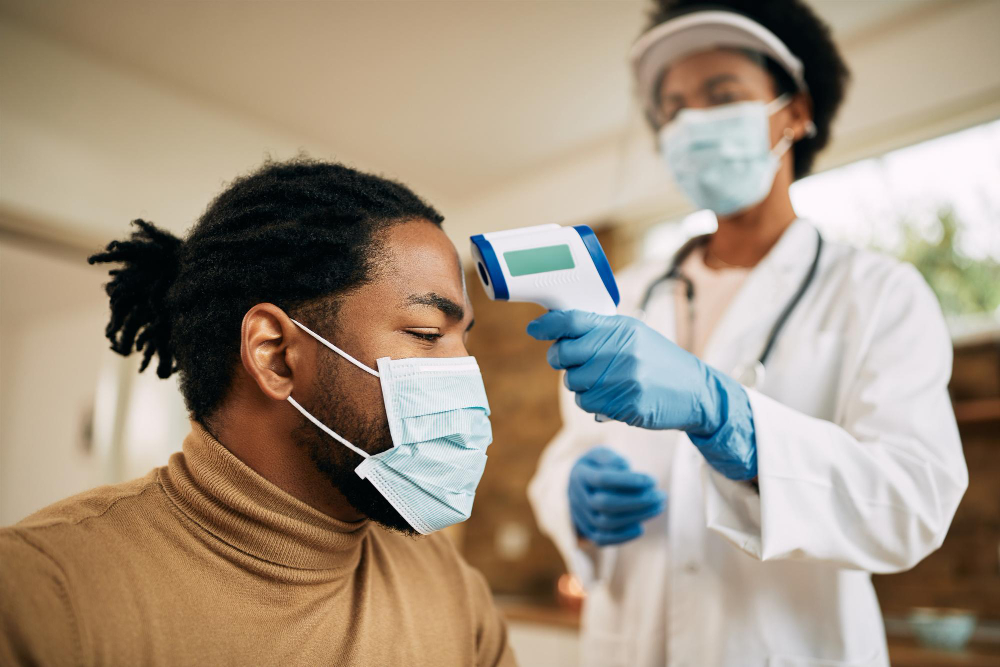
- Vitals & Physical Checks: These are the simplest, fastest screens. They include checking your blood pressure (for hypertension) and calculating your Body Mass Index (BMI) (for obesity, a risk factor for many NCDs).
- Foundational Blood Tests: A small blood sample can be used for a wide range of screening tests, including a Lipid Panel (to check cholesterol and triglyceride levels) and a Fasting Blood Glucose test (for diabetes and pre-diabetes). A Complete Blood Count (CBC) can also screen for conditions like anemia.
- Cancer Screenings: These are specific tests recommended at certain ages.
- Pap Test and/or HPV Test for women to detect cervical cancer.
- Mammogram for women to screen for breast cancer.
- Colonoscopy or other stool-based tests for both men and women to screen for colorectal cancer.
- Prostate-Specific Antigen (PSA) Test for men to screen for prostate cancer (this is often a personal decision made after a discussion with a doctor).
- Infectious Disease Screening: In regions across Africa, screening for infectious diseases like HIV, Hepatitis B, and Hepatitis C is a critical public health priority, as supported by bodies like the Nigeria CDC (NCDC) and the Rwanda Ministry of Health. Early detection allows for immediate treatment, which can manage the condition and prevent transmission.
Overcoming Common Barriers to Screening
If screening is so beneficial, why do so many people avoid it? Understanding these barriers is the first step to overcoming them.
“I Feel Fine, Why Should I Go?”
This is the most common misconception, and it shows a misunderstanding of what screening is. Screening is only for people who feel fine. It is designed to find diseases that have no symptoms. If you wait until you feel sick, you have missed the window for early disease detection.
“I’m Afraid of What They Might Find.”
This is a deeply human and valid fear. The key is to reframe the thought. The test does not create the disease; it just finds it. If a serious condition is there, it is there whether you know about it or not. The only difference is that by knowing, you have the power to fight it at its weakest point.
“I Don’t Have Time or Money.”
This is a matter of prioritizing your long-term health. A comprehensive screening might take a few hours. Managing a chronic disease or recovering from a stroke takes months, years, or a lifetime. The same is true for the cost. Proactive screening is one of the most effective, high-yield investments you can make in your future.
The Power of Proactive Health
The importance of early disease detection is clear: it is the most logical, powerful, and effective strategy for living a longer, healthier life. It shifts the entire paradigm of medicine from reacting to illness to proactively protecting wellness. By finding “silent” diseases at their inception, you gain the upper hand, giving yourself access to simpler treatments and the best possible outcomes.
Don’t wait for a symptom to be your first sign. Speak to a qualified healthcare provider about your personal risk factors and what a personalized screening plan looks like for you.
For information on diagnostic testing services in Nigeria, Rwanda, and Botswana, you can contact:
- Phone / WhatsApp: +234 811 687 0949
- Email: [email protected]
- Website: https://labscrollmedicals.com/contact-us
FINAL MEDICAL DISCLAIMER: This article is intended for informational and educational purposes only. It is not, and is not intended to be, a substitute for professional medical advice, diagnosis, or treatment. Always seek the advice of your physician or another qualified healthcare provider with any questions you may have regarding a medical condition. Never disregard professional medical advice or delay in seeking it because of something you have read in this article.
Leave A Comment